Audience brief
Defined likely user modes, product jobs, misconceptions, interaction risks, and the essential takeaway.
Case / Digital interpretation
For Webb’s fourth anniversary, the first public STORIMap invited audiences inside Centaurus A. I shaped a spectacular image into a navigable story, then led evaluation designed to improve what the format becomes next.

The interactive had to orient people quickly, guide attention, explain why Webb’s view matters, and reward every click with understanding.
Centaurus A is visually rich but conceptually dense: a past galactic collision, warped dust, star formation, ancient stars, and an active center all compete for attention. The risk was an impressive interface that became a collection of labels, or a story that collapsed into “there is a black hole here.”
I synthesized audience needs, science priorities, and interface constraints into one connected guided tour supported by exploratory points of interest.
Defined likely user modes, product jobs, misconceptions, interaction risks, and the essential takeaway.
Clarified the distinction between a narrative tour and independent discoveries, resolving overlap and protecting a strong story arc.
Reviewed final text for audience clarity and helped connect Webb’s infrared view to merger history, dust, stars, and activity.
Turned the pilot’s production experience into recommendations for kickoff, asset selection, roles, review, accessibility, and future planning.
Created collaboratively with writers, scientists, designers, developers, mission reviewers, and NASA partners. My contribution centered audience strategy, content structure, implementation learning, and evaluation leadership.
03 / System
The interface needed to produce a mental model, not simply reveal more labels.
What am I seeing, why does it matter, and what can I do here?
Use visual anchors and comparisons to direct attention rather than decorate the image.
Connect visible evidence to the galaxy’s history and Webb’s infrared capabilities.
Let each stop add to a coherent model rather than repeat isolated facts.
04 / Evidence
The final architecture paired a connected tour with independent invitations to look closer.

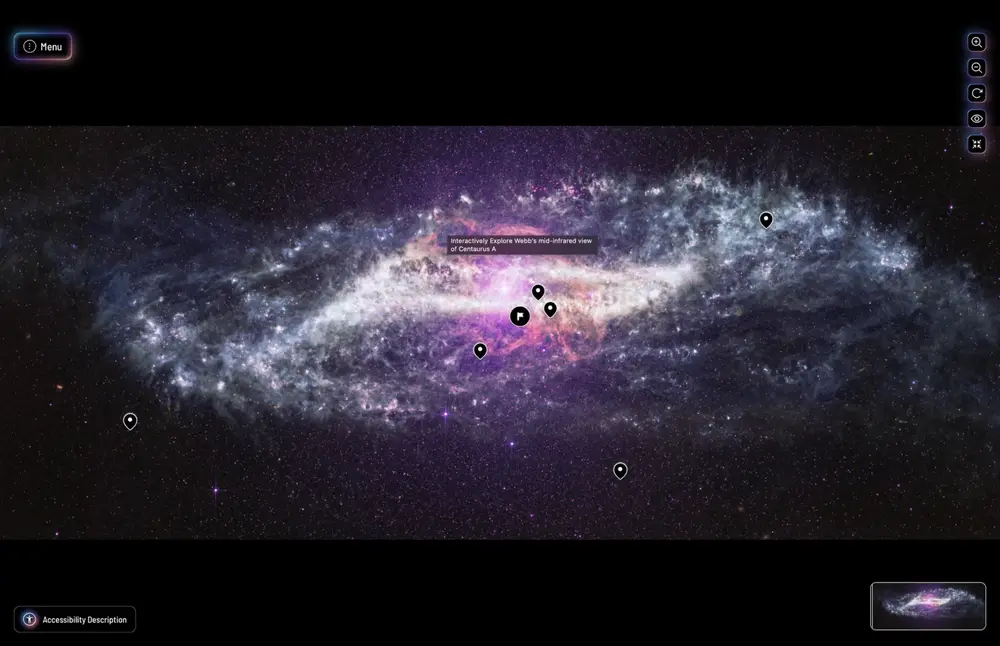
The implementation debrief surfaced a larger truth: STORIMap is not simply a visual extension of a press release. It is an audience-navigation tool that needs its own planning process.
Assess resolution, visual richness, comparison assets, and whether the telescope reveals something the interaction can make legible.
Define the tour arc, points of interest, audience questions, takeaways, and visual treatments before writing individual stops.
Clarify ownership across science, content, design, accessibility, development, and review at kickoff.
Integrate alternative descriptions, keyboard and screen-reader needs, and interaction behavior before the final build.
I became the primary coordination lead for the external evaluation: framing learning questions, aligning internal stakeholders, and distinguishing evaluation from user testing so the team could learn both what people understood and whether they could use the interface.
06 / What travels forward
An interactive succeeds when clicking changes what someone can see.
This work joins science translation, product strategy, cross-functional coordination, and evidence. The next value is not another identical map; it is a better institutional process for making and evaluating one.
Next: turning precedent into field readiness →